
Nearly two billion people consume alcohol regularly. But if you haven’t heard, it’s Dry January—where some people take on the challenge of refraining from drinking any alcohol for one full month. Will stopping alcohol for just one month actually bring significant health benefits compared to quitting altogether?
Today, we’ll discuss both scenarios and also cover how many major health organizations have recently changed their guidelines about what amount of alcohol is considered “safe.” They used to say one to two drinks a day could be considered safe for males and about one drink a day for females. We’ll explain why these guidelines have shifted—and spoiler alert: it has a lot to do with what alcohol really does to the human body.
We’ll look at the short-term effects (intoxication and hangovers), but more importantly, the long-term damage alcohol can cause to your brain, liver, stomach, and even how it increases the risk of certain cancers.
Let’s delve into the anatomical and physiological details.
Ethanol Absorption: Stomach vs. Small Intestine
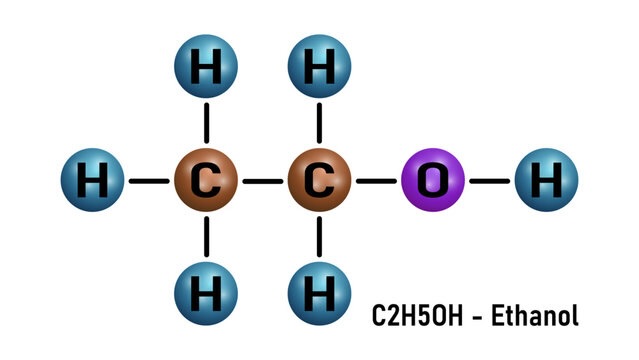
The type of alcohol humans consume is ethyl alcohol (ethanol), which I’ll just call alcohol from here on.
When you swallow alcohol, it travels down the esophagus into the stomach. Some alcohol (about 10–20%) can be absorbed directly through the stomach lining into the bloodstream. However, the majority—around 80%—is absorbed in the small intestine.
Absorption speed depends heavily on what’s in your stomach. Alcohol is absorbed much faster on an empty stomach. Fat and protein slow gastric emptying, which delays alcohol’s move into the small intestine, where most absorption happens.
On an empty stomach, blood alcohol levels can peak in 30–60 minutes. With food present, it may take 1–3 hours.
Once absorbed from the stomach and small intestine, alcohol goes straight to the liver via the hepatic portal vein.
The Liver’s Detox Process: Enzymes & Toxic Byproducts
The liver does the heavy lifting to metabolize alcohol. Understanding this process helps explain many of alcohol’s negative effects.
Alcohol enters liver cells (hepatocytes) and is first converted to acetaldehyde in the cytosol by the enzyme alcohol dehydrogenase (using NAD⁺ → NADH). Acetaldehyde is actually more toxic than alcohol itself and plays a major role in many harmful effects.
Next, acetaldehyde moves into the mitochondria and is converted to acetate by aldehyde dehydrogenase (again using NAD⁺ → NADH). Acetate can then be used as an energy source.
Only about 20–30% of alcohol is metabolized during the first pass through the liver. Roughly 70–80% of it enters the systemic circulation unmetabolized.
A small amount (~5%) is excreted unchanged through the kidneys, sweat, and lungs (which is why breathalyzers work and you can smell alcohol on someone’s breath).
The rest circulates freely, easily crossing the blood-brain barrier and entering almost any cell.
Alcohol in the Brain: Frontal Cortex & Cerebellum Disruption
Alcohol affects multiple brain regions and neurotransmitters:
- Prefrontal cortex — Responsible for reasoning, judgment, planning, and impulse control. Suppression explains why people say/do things they normally wouldn’t.
- Hippocampus — Handles short-term memory formation → leads to memory gaps and blackouts at higher doses.
- Cerebellum — Coordinates movement and balance → causes stumbling, poor coordination, and motor impairment.
Alcohol inhibits the release of antidiuretic hormone (ADH) from the pituitary gland, leading to increased urination (a diuretic effect) and contributing to dehydration. At extremely high levels, alcohol can depress the medulla oblongata, the part of the brainstem responsible for controlling breathing, heart rate, and reflexes. This repression can result in alcohol poisoning, which may cause slowed breathing, coma, or even death.
Systemic Damage: Heart, Pancreas, Stomach & More
Alcohol affects many tissues beyond the brain:
- Heart → Alters ion channels (arrhythmias), causes cardiomyopathy, dilates blood vessels (temporary low blood pressure).
- Liver → Fatty liver (steatosis), inflammation, fibrosis, cirrhosis from oxidative stress.
- Pancreas → Premature enzyme activation → pancreatitis.
- Stomach → Irritates mucosa → gastritis, ulcers.
- Immune system → Suppressed function → higher infection risk.
- Skeletal muscle → Impaired contraction → weakness, cramps.
Chronic exposure increases the risk of multiple cancers (oral, esophageal, colorectal, breast, liver) through DNA damage from acetaldehyde and reactive oxygen species (free radicals).
Most tissues can’t metabolize alcohol, so it passes through them, causes disruption, and then returns to the liver for eventual breakdown. Full clearance requires multiple passes through the liver.
Hangover symptoms (headache, nausea, fatigue, grogginess) come from dehydration, acetaldehyde irritation, inflammation, low blood sugar, poor sleep, and immune activation.
Advanced Metabolism: When Pathways Get Overwhelmed
When intake is high or chronic, the main pathway becomes saturated. As a result, the liver activates alternative pathways.
- The microsomal ethanol oxidizing system in the smooth endoplasmic reticulum produces acetaldehyde and reactive oxygen species, which are free radicals that can damage DNA, proteins, and lipids..
- The peroxisomal pathway, which involves catalase and hydrogen peroxide, also produces acetaldehyde.
The body can metabolize more alcohol, but this process also increases toxic byproducts. If aldehyde dehydrogenase becomes overwhelmed and NADH cannot be recycled quickly enough, acetaldehyde accumulates. This buildup causes liver cell damage, which can progress to fatty liver, inflammation, fibrosis, and eventually cirrhosis, increasing the risk of liver cancer.
What Happens When You Quit? One Month vs. Forever
Recent studies, including data from 2025, show that even one month without alcohol brings noticeable changes.
- Better sleep (deeper REM, fewer wake-ups)
- Improved mood (less anxiety/irritability)
- Weight loss (often 5–10 lbs from reduced calories)
- Lower blood pressure, better blood sugar & cholesterol
- Liver enzymes start normalizing quickly
- No more dehydration headaches or foggy mornings
It’s like a quick reset for your body.
Quitting permanently builds even greater benefits:
- Significantly reduced risk of cancers (oral, esophageal, liver, colorectal, breast)
- Continued heart health improvement
- Better cognition (sharper memory, focus, less depression)
- Stronger immunity
- For heavier drinkers: potentially 5–10 extra years of life
- Financial savings
New Guidelines (2025–2026): Is There a Safe Amount?
Recent updates to the Dietary Guidelines for Americans and statements from the World Health Organization have changed significantly. They no longer endorse specific “safe” daily limits (previously 1–2 drinks per day for men and 1 for women). Instead, they highlight:
They no longer promote specific “safe” daily limits (previously 1–2 drinks/day for men, 1 for women). Instead, they emphasize:
- No level of alcohol is completely safe for optimal health.
- Less is better.
- For those who choose to drink, very low amounts (e.g., no more than ~2 drinks per week) are far preferable.
- For maximum health optimization → zero alcohol is best.
(In the US, one standard drink contains approximately 14 grams of pure alcohol, which is equivalent to 12 oz of beer, 5 oz of wine, or 1.5 oz of 80-proof liquor.)
The goal here isn’t to judge anyone who drinks. It’s to provide you with the anatomical and physiological facts so you can make informed decisions about your alcohol consumption.
Knowledge is power—hopefully, this helps you unlock a deeper understanding of what alcohol really does in the body.